
Formula details
Product Details
Overview
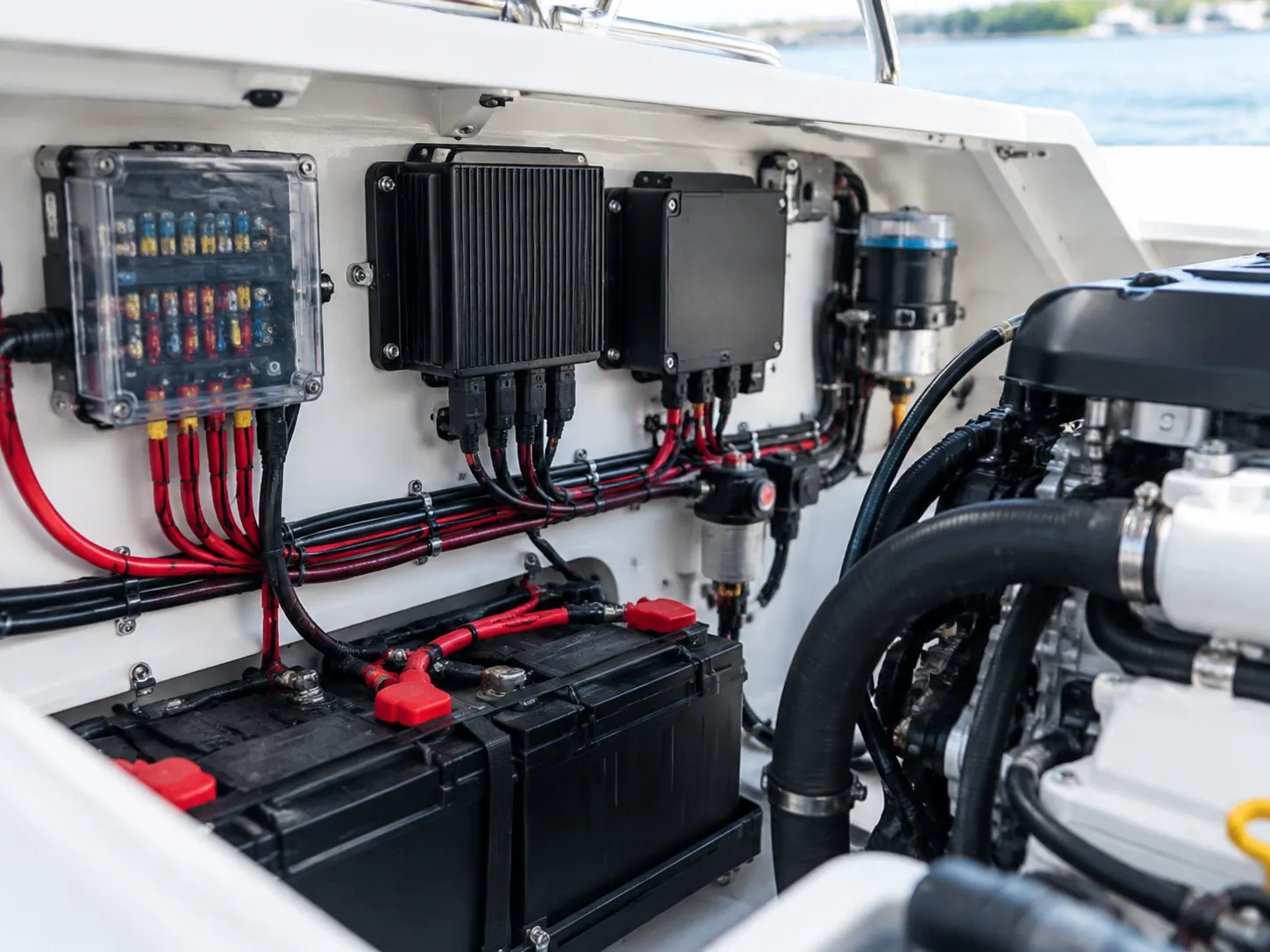
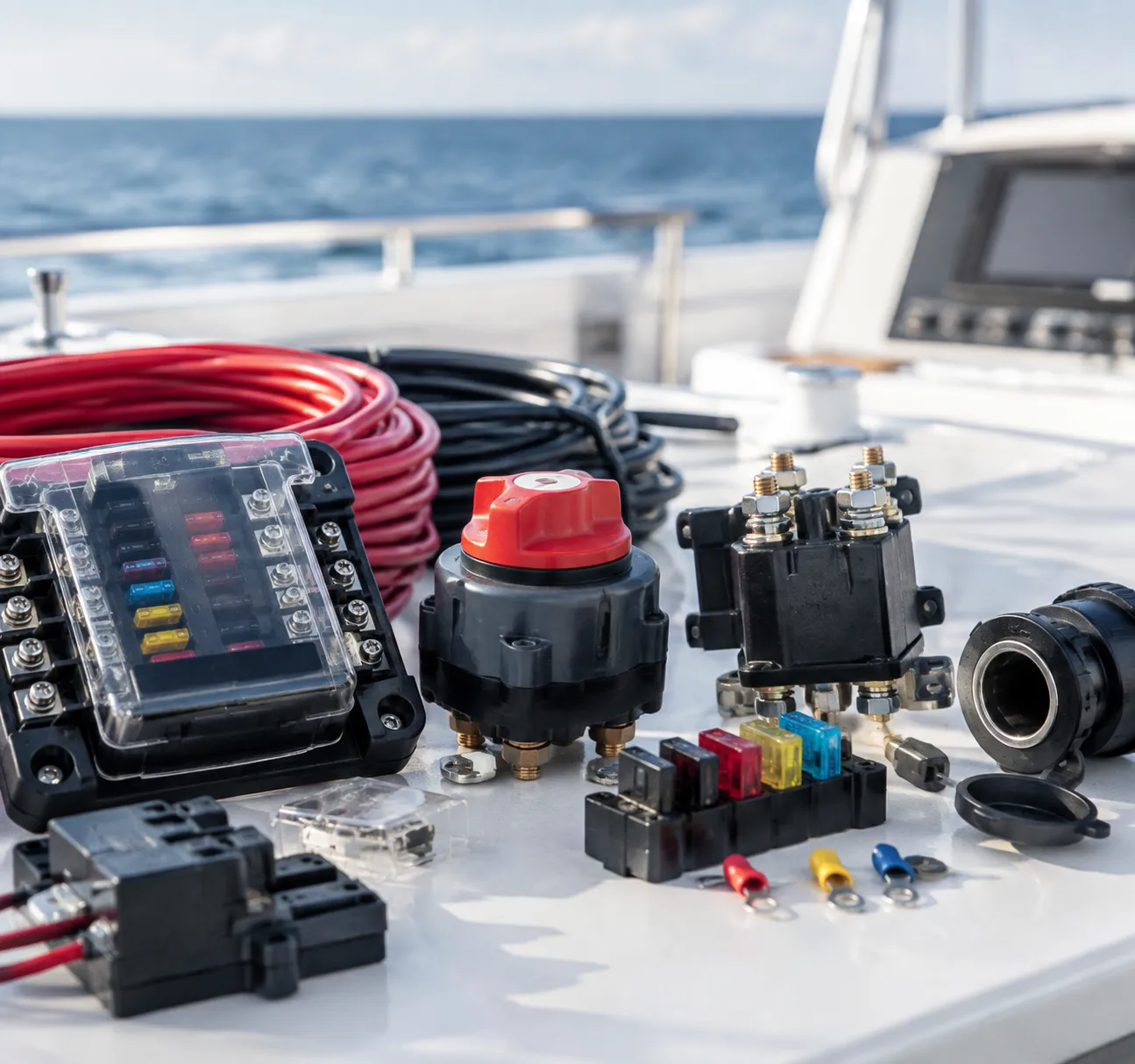
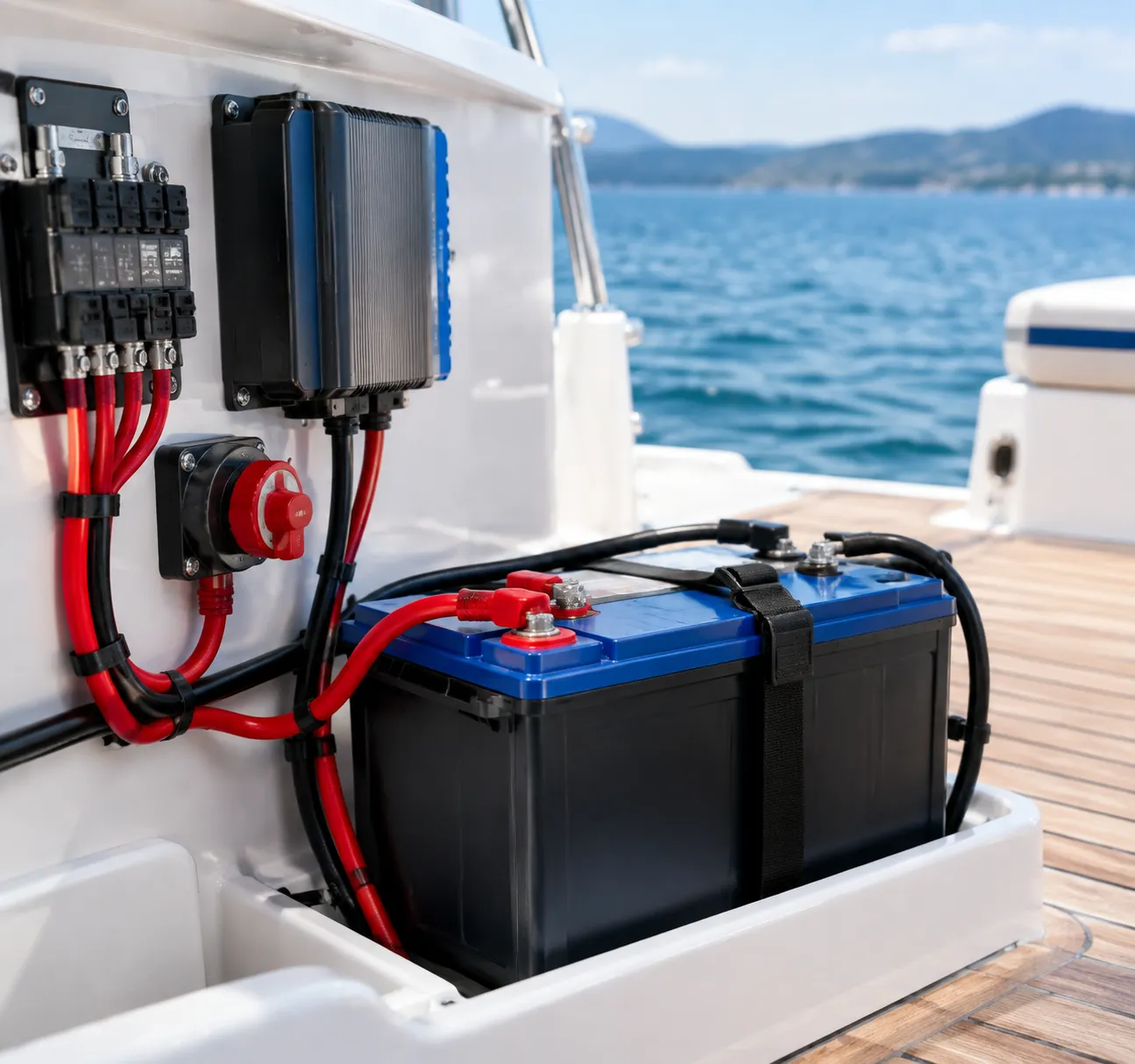
Core Marine 12 Volt Electrical Supplies Every Boat Needs
Tinned Copper Marine-Grade Primary Wire (AWG Sizing)
Standard automotive copper wire corrodes quickly when exposed to humid marine air. Our tinned copper marine wire features individual tin-plated copper strands that stop corrosion before it starts.
High-Strand Flexibility: Absorbs constant engine vibration and hull pounding without metal fatigue.
Accurate AWG Sizing: Correct American Wire Gauge dimensions prevent critical voltage drop across long runs.
Durable Jacket Insulation: Resists oil, acid, gasoline, and harsh UV exposure.
Marine Battery Switches and Dual-Battery Selector Switches
A dedicated marine battery switch 12v ensures complete isolation of your power sources when the vessel is moored or undergoing maintenance.
Switch Configurations: Available in simple ON/OFF configurations and multi-position 1/2/BOTH/OFF dual-battery selector switches.
Continuous High Amperage: Built with tin-plated copper studs to handle high engine cranking currents without overheating.
Safety Lockouts: Prevents accidental power draw and battery depletion during storage.
Waterproof Fuse Blocks and Circuit Breaker Distribution Panels
Centralizing your branch circuits protects delicate electronics and wiring from severe overcurrent situations.
Boat 12V Fuse Blocks: Compact designs with clear, waterproof covers and integrated negative common buses for fast troubleshooting.
Marine Circuit Breaker Panels: Resettable thermal breakers eliminate the need for spare blade fuses while providing direct, switchable circuit control.
Moisture Protection: Sealed gaskets and corrosion-proof contacts withstand high-humidity bilge and helm locations.
Heavy-Duty Positive and Negative Busbars
Consolidate messy wiring harnesses into clean, organized distribution points with heavy-duty marine busbar 12 volt systems.
High-Conductivity Base: Solid tin-plated brass or copper plates maximize conductivity and prevent heat buildup.
Insulated Protective Covers: Prevent accidental short circuits from dropped tools or loose hardware.
Multiple Terminal Points: Stainless steel studs accommodate high-gauge battery feeds alongside smaller accessory ring terminals.
Adhesive-Lined Heat Shrink Marine Terminals and Connectors
Securing wire ends against moisture intrusion requires specialized marine connectors.
Heat-Activated Adhesive: Creates a 100% waterproof seal that locks out moisture and eliminates wire wicking.
Seamless Tinned Copper Barrels: Ensures maximum crimp pull-out strength and corrosion resistance.
Color-Coded Sizing: Industry-standard red, blue, and yellow insulation allows fast identification of AWG wire sizes during installation.
Marine-Grade vs. Standard Automotive 12V Supplies: Key Differences
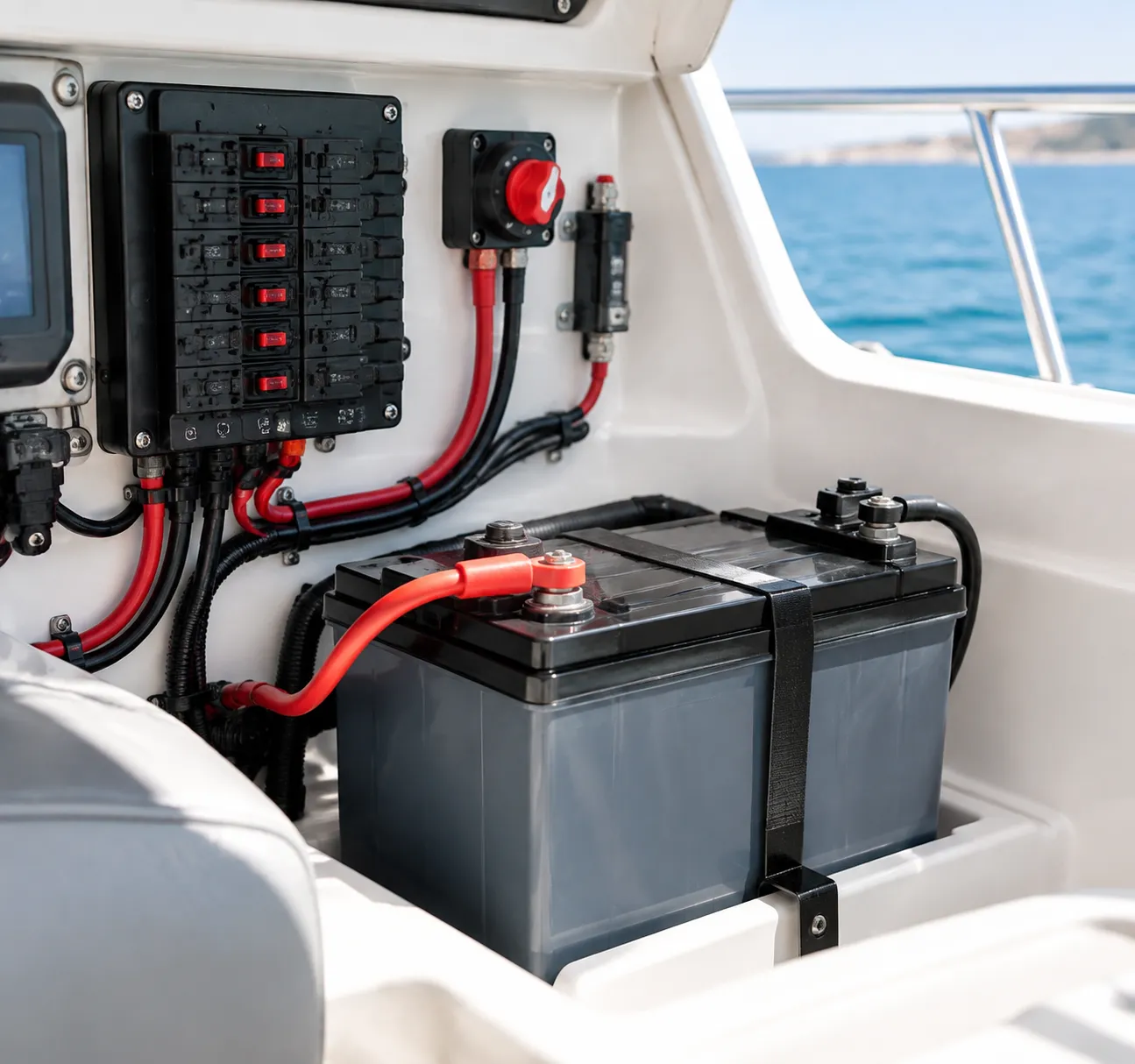
Using automotive electrical parts on a boat is one of the most common and dangerous mistakes in marine wiring. Marine environments involve high humidity, salt spray, constant wave impact, and confined fuel vapor zones. Standard automotive gear is simply not engineered to survive these conditions. Relying on dedicated marine electrical components parts and spare parts ensures complete circuit reliability and prevents onboard electrical fires.
| Feature | Marine-Grade 12V Supplies | Standard Automotive Supplies |
|---|---|---|
| Conductor Material | Individual tinned copper strands | Untinned, bare copper |
| Ignition Safety | SAE J1171 ignition-protected | Open-spark construction |
| Stranding & Flexibility | Type III high-strand (vibration proof) | Type II low-strand (prone to fatigue) |
| Jacket Durability | UV, fuel, oil, and moisture resistant | Standard automotive PVC |
Why Tinned Copper Wire Is Essential Against Saltwater Corrosion
Salt air rapidly oxidizes standard automotive bare copper, transforming it into brittle green copper oxide that increases electrical resistance and causes severe voltage drop. Marine-grade primary wire features individual copper strands coated with a layer of tin. This tin plating provides an impenetrable barrier against moisture intrusion, preventing corrosion from wicking up inside the insulation jacket.
SAE J1171 Ignition Protection Standards for Marine Engine Compartments
Boats trap heavy gasoline and battery vapors inside enclosed engine spaces and bilge compartments. A single spark from an unsealed switch, starter, or alternator can ignite these fumes instantly. Installing certified marine engine electrical parts replacement components with SAE J1171 ignition protection ensures internal contacts are fully sealed against surrounding explosive atmospheres.
Vibration Resistance and High-Strand Wire Flexibility
Boats endure continuous hull slamming and high-frequency engine vibration. Standard automotive wire uses fewer, thicker copper strands that stiffen and fracture over time. Marine-rated wiring uses fine, Type III high-strand construction that remains flexible, handles constant movement without work-hardening, and keeps connections intact inside terminal lugs.
UV-Resistant and Fuel/Oil-Resistant Outer Jacket Insulation
Marine wire jackets are engineered from specialized thermo-plastic compounds rated for harsh exposure. These jackets withstand:
Direct UV radiation: Prevents drying, chalking, and cracking on exposed consoles and decks.
Engine fluids: Resists degradation from diesel fuel, gasoline, hydraulic steering fluid, and engine oil.
Chemical exposure: Prevents battery acid splash from eating through insulation in confined battery boxes.
Marine 12V Battery Management and Charging Components
12V Deep Cycle, AGM, and LiFePO4 Marine Batteries
Selecting the right battery chemistry dictates how well an onboard 12V system handles sustained electrical loads and engine cranking.
| Battery Type | Usable Capacity (DoD) | Cycle Life | Key Advantage |
|---|---|---|---|
| Flooded Lead-Acid | ~50% | 300–500 | Low upfront cost; requires regular fluid maintenance |
| AGM (Absorbed Glass Mat) | ~50%–80% | 400–800 | Sealed, spill-proof, high vibration resistance |
| Lithium (LiFePO4) | ~80%–100% | 2,000–5,000+ | Lightweight, ultra-fast charging, stable 12V output |
For dedicated electronics and trolling motors, a true 12v deep cycle boat battery prevents rapid voltage sag under sustained continuous draw.
Automatic Charging Relays (ACR) and Isolators
Dual-battery setups require dedicated isolation to prevent house loads from draining the engine cranking battery.
-
- Automatic Charging Relay (ACR 12V): Combines battery banks automatically during charging (alternator or shore power) and separates them under discharge or engine cranking.
- Solid-State Battery Isolators: Route alternator output to multiple banks without mechanical relays, eliminating voltage drops and back-feeding.
- Manual Paralleling: Works in tandem with an emergency marine battery switch 12v for backup engine starting during low-voltage emergencies.
Onboard Smart Marine Battery Chargers and Maintainers
Multi-stage onboard marine chargers provide customized charging algorithms across different battery banks simultaneously. Sourcing high-grade marine spare parts and equipment ensures chargers meet strict marine safety and temperature-compensation profiles.
-
- Bulk Stage: Fast charging up to 80% capacity at maximum amperage.
- Absorption Stage: Tapered current at constant voltage to reach 100% saturation.
- Float / Maintenance Stage: Low-voltage trickle to prevent self-discharge and plate sulfation during storage.
Battery Monitors, Shunts, and Voltage Meters
Voltage readings alone do not display true battery capacity under load. Precision monitoring keeps high-draw systems within safe operating thresholds:
-
- Current Shunts: Measure exact amps entering and exiting the battery bank for accurate ampere-hour (Ah) tracking.
- Digital State-of-Charge (SOC) Gauges: Display real-time percentage, remaining run time, and net amp draw.
- High/Low Voltage Alarms: Alert operators before deep discharge damages LiFePO4 or AGM battery banks.
Circuit Protection and Power Distribution Supplies
Faulty wiring and power surges will ruin a trip on the water fast, and on a boat, electrical failures quickly become safety hazards. When dealing with marine 12 volt electrical supplies, circuit protection isn't an afterthought—it is the barrier between a minor equipment glitch and an onboard electrical fire. I focus on building distribution networks that handle vibration, moisture, and high current demands without voltage drop or short circuits.
ATO/ATC and Maxi Waterproof Inline Fuse Holders
For isolated electronics, stereo amplifiers, and direct-to-battery lines, dedicated inline fuses deliver essential overcurrent protection right at the source:
-
- ATO/ATC Waterproof Inline Fuse Holders: Ideal for branch circuits drawing 1A to 30A. Sealed silicone caps and molded rubber bodies lock out moisture, making them critical for bilge pumps and deck lighting.
- Maxi Fuse Holders: Built for larger current demands between 30A and 80A. They protect main feeder cables running from the battery bank to secondary sub-panels.
- Tinned Leads: Every quality marine inline fuse holder waterproof assembly features pre-tinned copper pigtails to prevent corrosion from wicking under the insulation.
Thermal Marine Circuit Breakers (Surface Mount and Panel Mount)
Fuses blow and need replacement; resettable marine circuit breakers provide fast recovery and act as manual shutoff switches during service:
| Breaker Type | Mounting Style | Typical Application | Key Feature |
|---|---|---|---|
| Type III Reset | Surface Mount | Windlass, bow thruster, main DC feeds | Push-to-trip manual disconnect lever; ignition-protected |
| Magnetic/Thermal | Panel Mount | Navigation suites, cabin distribution boards | Compact profile, visual trip indicator toggle |
| Push-Button Thermal | Panel or Sub-Box | Bilge blowers, accessory 12V sockets | Splash-proof boot compatibility, quick reset button |
Sourcing certified, ignition-protected breakers is vital for gasoline engine compartments. For commercial fleets and custom refits, our specialized parts sourcing ensures every protection device meets rigorous marine survey standards.
Common Busbars and Insulated Power Distribution Studs
Clean cable management prevents rat's-nest wiring and dangerous loose connections behind the helm:
-
- Heavy-Duty Marine Busbar 12 Volt Units: Nickel-plated brass or tinned copper busbars consolidate multiple negative returns and positive power feeds into a single, organized hub. Rated from 100A to 600A continuous load.
- Insulated Power Distribution Studs: Single and dual stainless-steel terminal studs provide rock-solid connection points for large-gauge battery cables, routing power neatly to high-draw inverters and distribution panels.
- Protective Insulating Covers: High-impact polycarbonate covers prevent accidental metal tool contact and direct battery shorts during maintenance.
Grounding Plates and Lightning Protection Bonding Systems
Managing low-voltage marine systems requires proper grounding to mitigate stray-current corrosion and direct lightning strikes safely away from critical electronics:
-
- Sintered Porous Bronze Grounding Plates: Mounted externally beneath the waterline, these plates provide an expansive surface area for low-resistance RF and DC grounding without requiring massive hull penetrations.
- Bonding System Bus Networks: Interconnecting all metal through-hulls, engine blocks, fuel tanks, and running gear to a central sacrificial anode system stops galvanic corrosion before it eats through expensive running gear.
- Transient Voltage Suppression: Heavy-gauge tinned copper bonding conductors divert static buildup and induced lightning surges away from sensitive navigation displays directly into the surrounding water.
Switches, Panels, and Control Supplies for Boats
Controlling your onboard circuits demands rugged, reliable switchgear built specifically for damp, high-vibration helm environments. When outfitting a vessel with core marine 12 volt electrical supplies, selecting high-grade control consoles ensures every onboard system operates smoothly and safely under real-world sea conditions.
Waterproof 12V Rocker Switch Panels with LED Backlights
A pre-wired marine grade switch panel streamlines dashboard layouts and isolates essential circuits.
-
- IP65/IP67 Ingress Protection: Sealed rubber gaskets and UV-stabilized faceplates prevent salt spray from reaching internal contact points.
- Integrated Circuit Breakers: Built-in push-to-reset thermal breakers eliminate the need for separate fuse blocks behind the dash.
- Backlit Identification: Soft LED backlights allow quick visual confirmation of active circuits during night operations without blinding night vision.
Automatic Bilge Pump Manual/Off/Auto Switch Consoles
Managing water evacuation requires dedicated switching connected directly to your battery bank and bilge pump float switch 12v setups.
-
- Three-Way Control: Offers immediate manual override, total system shut-off for maintenance, and continuous automatic float switch readiness.
- Spring-Loaded Momentary Return: Prevents accidental continuous dry running in manual mode, protecting the pump motor from burning out.
- Integrated Alarm Lights: Clear visual and audible warnings activate if the pump runs continuously, alerting you to emergency hull leaks.
Marine Navigation and Anchor Light Switch Controls
Standard on-off toggles do not fulfill collision regulation requirements for running lights. Specialized navigation light switches manage independent circuit states:
-
- Dual-Throw (ON-OFF-ON) Configuration: Activates both sidelights and the all-round white light underway, while isolating the circuit to only the anchor light when moored.
- Diode Isolation: Prevents back-feeding between the masthead and running lights, ensuring complete compliance with standard maritime lighting rules. For larger commercial refits or customized helm builds, integrating standardized components aligns with our broader technical maritime and vessel engineering services.
12V Auxiliary Power Sockets, Dual USB Ports, and Voltmeter Combos
Modern helms require versatile power for mobile navigation tools, communication gear, and real-time battery monitoring.
| Component | Technical Highlights | Primary Function |
|---|---|---|
| 12V Marine Dual USB Power Socket | Fast-charging USB-A / USB-C PD with waterproof twist-lock cap | Charges smart devices, tablets, and GPS units efficiently. |
| 12V Cigarette-Style Aux Socket | Corrosion-resistant nickel-plated brass contacts with rubber cover | Powers portable spotlights, tire inflators, and 12V DC marine accessories. |
| Digital LED Voltmeter | Real-time 8V–30V DC readout | Instantly detects low-voltage drop or alternator overcharging. |
Marine Wire Connectors, Terminals, and Cable Routing Supplies
Corrosion and physical vibration are the primary causes of 12V system failures at sea. Securing and sealing your connections with dedicated cable routing hardware and waterproof marine wire connectors ensures consistent power delivery across all onboard circuits.
Heat Shrink Butt Connectors, Ring Terminals, and Spade Forks
Open, unsealed crimp terminals fail quickly in salt air. We use adhesive-lined heat shrink terminals that melt and seal around the wire insulation when heated:
-
- Heat shrink butt connectors: Create fully waterproof inline splices that resist pulling strain and saltwater intrusion.
- Tinned copper ring terminals: Provide maximum surface contact and mechanical strength for battery posts, ground studs, and busbars.
- Flanged spade forks: Allow quick, secure component replacements without completely removing terminal screws.
Waterproof Cable Glands and Bulkhead Pass-Through Fittings
Running wires through decks, transoms, and bulkheads requires watertight pass-throughs to prevent hull leaks and wire chafing:
-
- Compression cable glands: Seal tightly around round cables with rubber grommets, maintaining an IP68 waterproof rating.
- Bulkhead strain-relief fittings: Prevent heavy wire bundles from rubbing against raw fiberglass or aluminum edges during hull flexing.
- Reliable marine electrical parts and equipment protect high-load circuits from mechanical wear at every structural penetration point.
Corrosion-Inhibiting Dielectric Grease and Liquid Electrical Tape
Chemical barriers add an extra layer of defense against electrolytic corrosion on exposed conductive surfaces:
-
- Dielectric grease: Displaces moisture and prevents galvanic corrosion inside multi-pin plugs, bulb sockets, and fuse slots without interrupting electrical conductivity.
- Liquid electrical tape: Coats complex or irregular splices, creating a flexible, vulcanized rubber seal that will not harden or crack under temperature swings.
UV-Rated Nylon Zip Ties, Split Wire Loom, and Cushion Cable Clamps
Proper cable management keeps your boat's bilges and console wiring organized, accessible, and protected from physical damage:
-
- UV-stabilized black nylon cable ties: Secure harness runs without degrading or snapping from sun exposure.
- Corrugated split wire loom: Shields individual primary wires against abrasion, sharp edges, and accidental impacts inside engine bays.
- Rubber-cushioned stainless steel clamps: Hold heavy battery cables firmly against stringers and bulkheads while damping engine vibration.
Step-by-Step Guide: Selecting the Right 12V Marine Wiring Supplies
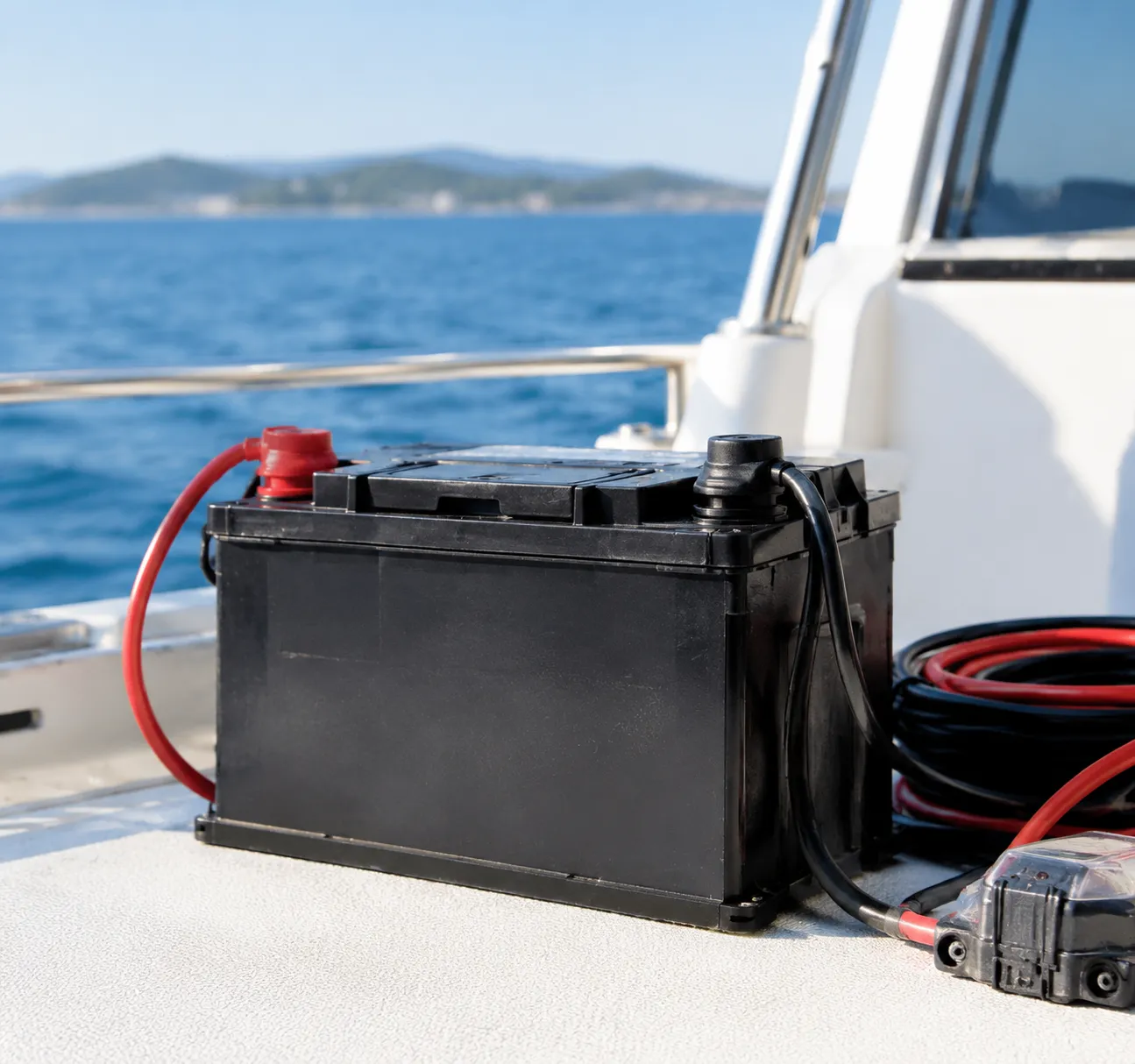
Getting the wiring setup right on a boat comes down to planning your circuits before buying materials. Undersized cables, poor terminations, and improper circuit protection cause most onboard electrical failures. When upgrading or refitting, I rely on a structured, step-by-step process to ensure every component in our marine 12 volt electrical supplies inventory delivers reliable power and safety on the water.
Calculating Amp Draw and Total Circuit Load
Before picking up any wire or hardware, determine the electrical demand of every device on the circuit:
-
- Find the Continuous Load: Check the wattage rating on your electronics, lighting, or pumps. Use the formula: Amps = Watts / Volts (e.g., a 60W light bar at 12V draws 5 amps).
- Account for Surge Loads: Equipment with electric motors (macerators, windlasses, and bilge pumps) draws significantly more current at startup.
- Calculate Total Circuit Capacity: Add up the amperage of all devices sharing a single branch circuit to size your main supply cables and fuse blocks accurately.
For vessel refits or fleet maintenance overhauls, referencing a detailed ship repair guide ensures your system sizing aligns with standardized engineering and safety practices.
Determining Wire Gauge (AWG) to Prevent 3% Voltage Drop
Marine DC circuits are vulnerable to voltage drop over distance. Critical equipment—such as navigation lights, bilge pumps, and communication electronics—must maintain less than a 3% voltage drop, while non-critical accessories allow up to 10%.
To size your wire correctly:
1. Measure Total Run Length: Calculate the round-trip distance from the power source (battery or busbar) to the load and back to ground.
2. Select ABYC Compliant Marine Wire: Always use multi-strand tinned copper marine cable to combat corrosion and vibration fatigue.
3. Use the Gauge Reference Guide:
| Total Amperage | 10 ft Round Trip | 20 ft Round Trip | 30 ft Round Trip |
|---|---|---|---|
| 5 Amps | 16 AWG | 14 AWG | 12 AWG |
| 10 Amps | 14 AWG | 12 AWG | 10 AWG |
| 15 Amps | 12 AWG | 10 AWG | 8 AWG |
| 20 Amps | 10 AWG | 8 AWG | 6 AWG |
Choosing Between Fuses vs. Resettable Circuit Breakers
Selecting the right overcurrent protection protects your wiring from overheating and catching fire:
-
- Waterproof Blade Fuses (ATO/ATC): Best suited for dedicated electronic displays, stereos, and individual low-current accessory lines inside compact fuse blocks.
- Thermal Marine Circuit Breakers: Ideal for high-amp circuits, main panel switchboards, windlasses, and trolling motors. They provide quick visual indication of a tripped circuit and easy push-button resetting without requiring spare parts onboard.
Selecting the Right Crimping Tools for Solid Mechanical Connections
Soldered joints become brittle and crack under vessel vibration, which makes proper mechanical crimping mandatory for reliable 12V marine circuits:
-
- Double-Crimp Ratcheting Pliers: Ensure uniform pressure on both the wire core and the insulation sleeve.
- Heat Shrink Terminals: Use adhesive-lined heat shrink terminals that melt sealant directly into the wire strands when heated.
- Controlled Heat Gun: A direct flame torch burns the insulation; use an electric heat gun with a deflector nozzle to create an airtight, moisture-proof seal.
When sourcing components in bulk for fleet projects or maintenance routines, our marine spare parts sourcing guide details how to select marine-certified hardware that meets strict offshore quality standards.
Frequently Asked Questions About Marine 12 Volt Electrical Supplies
Can I use standard automotive wire on my boat?
No. Standard automotive wire uses bare copper strands and thin PVC insulation that quickly corrode and crack in damp, salty environments. Marine installations require tinned copper marine wire to resist galvanic corrosion and withstand continuous hull vibration. We always adhere to strict marine quality compliance standards to ensure onboard wiring remains durable and safe under heavy sea conditions.
What is the difference between ABYC and SAE wire standards?
The table below highlights the core differences between marine-grade and automotive wiring standards:
| Feature | ABYC Compliant Marine Wire | Standard SAE Automotive Wire |
|---|---|---|
| Conductor Material | Individually tinned copper strands | Bare untinned copper |
| Strand Count | High strand count (Type III flexible) | Low strand count (stiff) |
| Insulation Rating | Oil, fuel, moisture, and 105°C heat resistant | Basic heat/moisture resistance |
| Actual Copper Gauge | Up to 10–12% larger cross-section per AWG | Smaller cross-sectional conductor area |
How do I calculate voltage drop on a 12-volt marine circuit?
To maintain peak performance and protect sensitive marine electronics, total voltage drop must stay under 3% for critical equipment (navigation lights, bilge pumps, electronics) and 10% for general loads (cabin lights, utility sockets).
Use this standard DC formula:
Voltage Drop (Volts) = (Length in feet × Current in Amps × Wire Resistance per foot × 2)
Always measure the round-trip distance (from the power source to the load and back to ground) when sizing your cables.
Why do I need ignition-protected electrical parts on a boat?
Enclosed engine rooms and fuel tank compartments trap volatile gasoline vapors. Standard electrical switches, relays, and alternators produce tiny external sparks during normal switching. Certified ignition-protected marine electrical hardware (rated SAE J1171 / ISO 8846) is sealed to prevent internal sparks from igniting surrounding fumes. Sourcing these vital parts through a reliable one-stop vessel supply guarantees that every installed component meets critical safety guidelines.
What size fuse should I install for my 12V marine accessories?
Fuses and circuit breakers are sized to protect the wire, not just the appliance.
Match the fuse to wire capacity: Check the ampacity rating of the wire gauge being used and ensure the fuse rating never exceeds that maximum threshold.
Match the load requirement: The fuse rating should be approximately 125% to 150% of the device's continuous operating amperage.
Placement rule: Install the main fuse or circuit breaker within 7 inches (18 cm) of the battery connection to protect the entire length of the positive feed.