
Core Technical Management Pillars
JUKO MARINE delivers integrated ship management solutions engineered to maximize fleet operational uptime, maintain rigorous classification standards, and safeguard asset values worldwide. Our proactive framework transitions vessel operations from reactive emergency repairs to predictive, data-driven planned maintenance systems tailored to the exact operational profile of modern merchant vessels.
Digitized Logging & Predictive Vessel Maintenance Integration
Modern marine engineering demands real-time diagnostic monitoring and advanced data analytics. By integrating continuous machinery telemetry with tamper-proof digitized engine room logbooks, our senior marine superintendents pinpoint mechanical wear and operating anomalies before catastrophic equipment failures occur.
- Real-Time Machinery Telemetry: Continuous performance data monitoring across main propulsion engines, auxiliary generators, and critical marine machinery pumps for dynamic trend analysis.
- Digitized Engine Room Logs: Cloud-synchronized, audit-ready operational records accessible directly by shore-based technical management desks.
- Vibration & Oil Diagnostics: Scheduled lube-oil spectral analysis and acoustic vibration monitoring to catch component fatigue early and reduce off-hire time.

Planned Maintenance System (PMS)
Our class-approved Planned Maintenance System structures routine maintenance routines according to original equipment manufacturer guidelines and mandatory flag state regulations.
- Preventive Scheduling: Automated work order generation based on running hours and calendar intervals.
- Machinery Condition Tracking: Baseline performance profiling for main engines and key auxiliary machinery.
- Spare Parts Integration: Direct synchronicity between scheduled overhauls and global spare parts supply chains.
Drydocking Supervision & Major Overhaul
Full-lifecycle drydocking management ensuring vessel overhaul projects conclude on schedule and strictly within budget through meticulous specification drafting and shipyard oversight.
- Detailed Work Specifications: Precise repair list definitions designed to prevent unexpected shipyard variation orders.
- On-Site Superintendence: Dedicated senior superintendents directing daily yard operations, QA/QC, and safety.
- Budget & Schedule Control: Rigorous auditing of yard tenders, progress milestones, and final repair invoices.
Machinery & Electrical Support
Round-the-clock technical assistance for main engine, auxiliary generator, and electrical automation system troubleshooting across global maritime trade routes.
- Emergency Technical Dispatch: Rapid deployment through our emergency ship repair riding squads and technical superintendents.
- Automation Diagnostics: Advanced electrical fault isolation, control system recalibration, and sensor repairs.
- Major Overhaul Engineering: Specialist supervision for main engine rebuilds, shaft alignment, and boiler maintenance.
Class Survey & Statutory Compliance
Proactive survey preparation and regulatory management working in close coordination with major classification societies to guarantee seamless survey renewals.
- Major Society Alignment: Continuous compliance management with DNV, ABS, LR, ClassNK, and CCS standards.
- Statutory Certification: Rigorous oversight of ISM, ISPS, MLC, and SOLAS continuous compliance requirements.
- Deficiency Rectification: Rapid resolution and corrective action planning for Port State Control (PSC) findings.
How JUKO MARINE Elevates Technical Management
Comparing conventional reactive ship maintenance with our integrated, predictive technical management model.
| Operational Focus | Traditional Technical Management | JUKO MARINE Solution |
|---|---|---|
| Maintenance Strategy | Reactive breakdown repairs and rigid calendar-only component replacements | Predictive PMS driven by real-time machinery condition monitoring and running-hour analytics |
| Drydocking Oversight | Vague repair specifications leading to budget overruns, scope creep, and yard delays | Meticulous work specs and hands-on drydocking supervision by senior marine superintendents |
| Emergency Support | Fragmented third-party agent dispatch with delayed response times and communication barriers | Direct 24/7 technical desk coordination and rapid voyage repair squad deployment |
| Class Compliance | Last-minute inspection prep risking conditional recommendations and operational restrictions | Continuous survey readiness audits ensuring maximum first-pass class survey compliance |
Optimize Your Fleet Technical Performance
Discuss your vessel maintenance strategy with JUKO MARINE and identify opportunities to improve machinery reliability, strengthen maintenance planning, and reduce unplanned downtime risk.
Standardized Lifecycle Maintenance & Drydocking Management
JUKO SHIP SERVE executes a structured four-stage lifecycle maintenance and drydocking management workflow designed to eliminate operational off-hire, maintain class survey compliance, and protect maritime asset value. From pre-docking vessel condition surveys to sea trial commissioning, our senior marine engineering superintendents manage every technical milestone with complete cost control and engineering precision.
Condition Assessment & Vessel Inspection
Executing comprehensive physical surveys, NDT testing, and predictive machinery diagnostics to establish accurate technical baselines before drydocking.
- • Ultrasonic hull steel thickness gauging and visual surveys
- • Main engine performance diagnostics and lube oil analysis
- • Automation, control systems, and electrical safety testing
Maintenance Planning & Budgeting
Drafting detailed repair specifications, controlling OPEX budgets, and procuring long-lead OEM spare parts well in advance.
- • Itemized repair work scope generation for shipyard tenders
- • Comprehensive drydocking budget and cost forecasting
- • Critical marine machinery spare parts and component sourcing logistics
Execution & On-Site Yard Supervision
Deploying experienced marine superintendents for continuous quality control, timetable enforcement, and variation management.
- • Daily work progress monitoring and rigorous QA/QC audits
- • Strict variation order oversight to prevent budget overrun
- • Occupational safety and environmental compliance monitoring
Commissioning & Sea Trial Verification
Conducting rigorous machinery load tests, coordinating class society surveys, and securing formal vessel departure clearance.
- • Full-power sea trials and propulsion system load testing
- • Classification society survey completion and sign-off
- • Statutory certificate issuance and seamless commercial handover
Marine Engineering Project Management & Voyage Repair Coordination
Effective end-to-end ship management and technical oversight require rigorous planning and proactive diagnostics long before a ship enters the shipyard. JUKO SHIP SERVE integrates real-time condition monitoring into every planned maintenance system to track machinery performance, detect structural degradation, and prevent costly equipment failures. By pairing regular vessel condition surveys with continuous operational analysis, our technical superintendents ensure merchant fleets maintain optimal mechanical reliability and fuel efficiency.
During complex overhauls and emergency breakdowns, schedule integrity and cost transparency are paramount. Unplanned variation orders and extended berth stays erode charter profitability. Our drydocking management team provides dedicated on-site superintendence at premier shipyards worldwide, while our global voyage repair coordination desk rapidly dispatches specialized technicians for afloat repairs to resolve technical issues without disrupting sailing schedules.
Key Operational Deliverables
- Pre-docking audits eliminate budget surprises and delay
- Class survey compliance across all major IACS societies
- Voyage repair coordination for worldwide emergency support
- Global marine spare parts equipment sourcing integrated into repair schedules

Experienced Technical Superintendence
JUKO SHIP SERVE marine engineering superintendents deliver hands-on quality assurance, cost control, and class compliance directly on shipyard floors globally.
Lifecycle Workflow Breakdown & Technical Deliverables
| Stage | Core Technical Tasks | Primary Deliverables | Risk & Cost Control Strategy |
|---|---|---|---|
| Stage 1: Assessment | Vessel condition surveys, ultrasonic thickness measurement, vibration analysis | Detailed Vessel Health Report & Repair Work Scope | Identifies structural and mechanical defects before yard tendering |
| Stage 2: Planning | Drydock spec drafting, tender evaluation, OEM spare parts procurement | Approved Yard Specifications & Fixed OPEX Budget | Locks in competitive yard pricing and avoids long-lead supply delays |
| Stage 3: Execution | On-site yard superintendence, daily QA/QC inspection, work log auditing | Daily Progress Logs & Audited Variation Reports | Prevents scope creep, unauthorized costs, and schedule extension |
| Stage 4: Commissioning | Sea trials, main engine load testing, IACS surveyor sign-off | Statutory Renewal Certificates & Handover Clearance | Guarantees full operational reliability and immediate charter readiness |
Technical Compliance and Vessel Performance
JUKO SHIP SERVE delivers end-to-end technical superintendence and engineering solutions designed to satisfy strict international maritime decarbonization targets. From operational Carbon Intensity Indicator (CII compliance) strategies and EEXI retrofits to seamless EU ETS and FuelEU Maritime integration, our ship-management framework safeguards asset value, reduces fuel consumption, and ensures risk-free commercial operations worldwide.
Navigating IMO Decarbonization Management & Regional Mandates
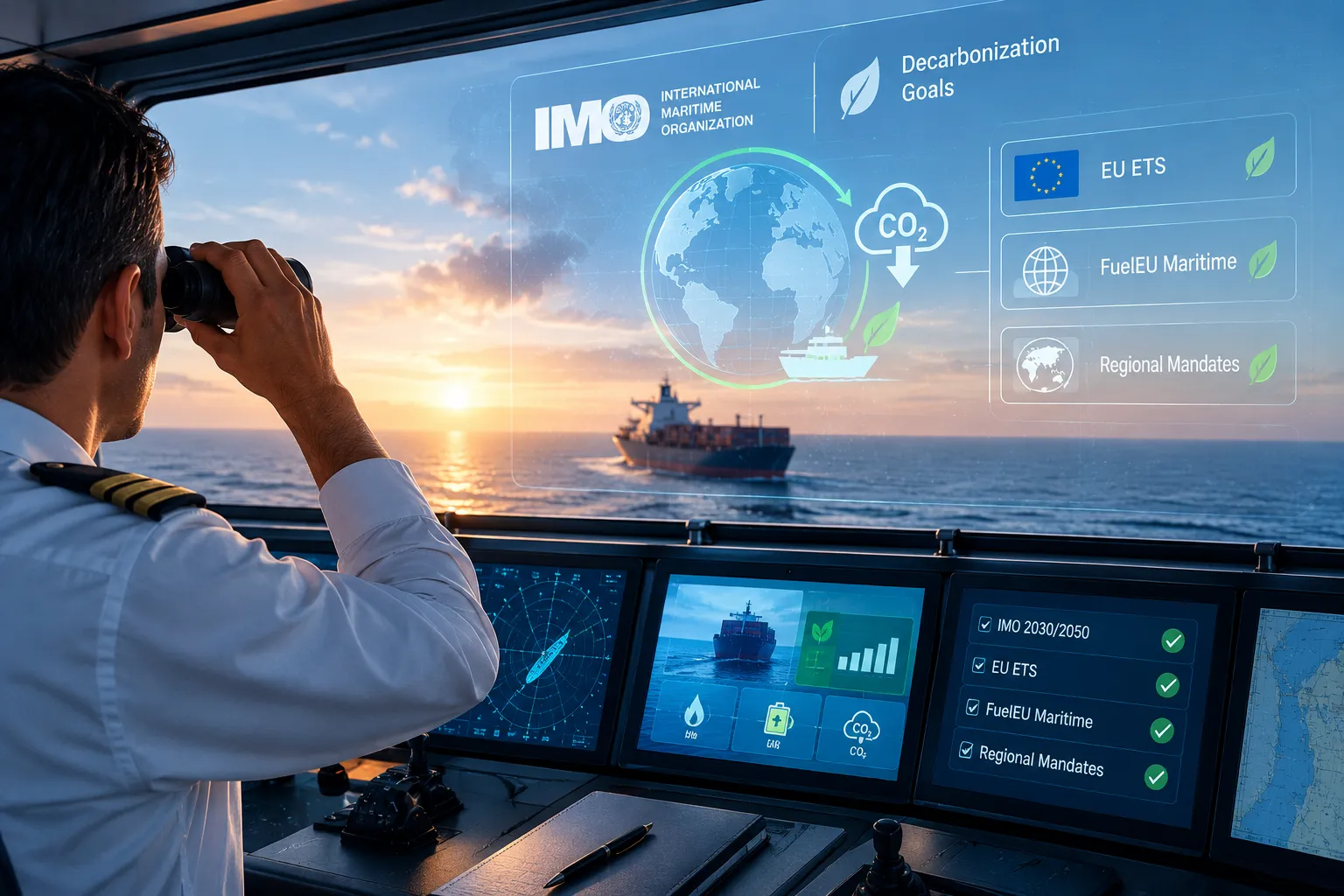
Modern fleet management demands a proactive response to rapidly evolving international maritime environmental regulations. Accelerating greenhouse gas reduction targets require dynamic engineering oversight, continuous telemetry monitoring, and class-approved one-stop-vessel-supply modifications to protect charterability across primary trade routes.
Our technical superintendents align every vessel operating profile with the International Maritime Organization GHG strategy and regional frameworks like the European Union Emissions Trading System. By engineering hydrodynamic Energy Saving Devices (ESDs), implementing Engine Power Limiting (EPL), and deploying real-time digital energy monitoring, JUKO SHIP SERVE optimizes vessel energy efficiency while protecting long-term asset value.
Verifiable voyage emissions accounting, allowance tracking (EUA) support, and penalty mitigation strategies.
Class-certified Engine Power Limiting installations, duct integration, and hydrodynamic hull performance retrofits.
Statutory Compliance Framework & Data Governance Protocol
Maintaining consistent regulatory compliance requires standardized data integrity and class-approved documentation. JUKO SHIP SERVE enforces rigorous audit protocols across every mandatory environmental framework to ensure zero-deficiency Port State Control inspections, integrated with full safety-compliance-crew-management standards.
| Regulatory Framework | Mandatory Scope | Implementation Strategy | Verification Status |
|---|---|---|---|
| SEEMP Part III | Operational CII management plan and annual reduction target implementation. | Tailored 3-year rolling corrective action plans and dynamic voyage speed optimization. | Class Approved |
| EU MRV & UK MRV | Monitoring, reporting, and verification of voyage carbon emissions in European territorial waters. | Automated digital logbook telemetry with direct API integration to accredited verification bodies. | Fully Automated |
| IMO DCS | Annual fuel oil consumption reporting for international flag state Statement of Compliance. | Standardized mass flowmeter logging and monthly consumption audits by superintendents. | Flag Certified |
| EU ETS Surrender | Mandatory annual carbon allowance surrender based on verified maritime voyage emissions. | Liability calculation, voyage speed adjusting, and carbon allowance tracking support. | Audit Ready |
Fleet Energy Efficiency & Performance Engineering
Maximizing operational efficiency requires combining physical hull maintenance with digital intelligence. Our technical superintendents focus on key performance indicators to reduce fuel consumption and maintain asset uptime continuously.
Predictive CII Modeling
Continuous calculation of operational CII scores per voyage segment to prevent performance downgrades.
- Real-time route optimization
- Speed & consumption profiling
Automated Fuel Telemetry
Integrated sensors logging real-time fuel oil consumption across main engines and auxiliary systems.
- Instant specific fuel oil consumption
- Electrical load balance monitoring
Hull & Propeller Integrity
Data-driven bio-fouling management and hull performance monitoring to minimize hydrodynamic drag.
- Condition-based underwater cleaning
- Premium silicone coating supervision
Statutory Survey Audit
Pre-inspection technical surveys ensuring zero-deficiency issuance of environmental class certificates.
- Pre-class survey verification
- Statutory documentation audit
Integrated Technical Management & Decarbonization Solutions
At JUKO SHIP SERVE, technical superintendence and environmental compliance operate as a single unified discipline. Partner with our global marine engineering team to maximize fleet uptime, guarantee statutory compliance, and optimize vessel operating costs.
Unifying Engineering, Procurement, and Global Port Operations
JUKO SHIP SERVE aligns technical management with global spare parts sourcing and port logistics through an integrated ship-supply framework.
Supply Chain Integration
Directly couples engineering specifications with OEM marine spare parts sourcing to eliminate technical misalignments and procurement delays.
- Automated technical specification verification
- Direct OEM marine spare parts sourcing
- Minimized administrative overhead and lead times
Emergency Repair Network
Delivers rapid voyage repair coordination across major global ports, integrating technical oversight with immediate field execution.
- 24/7 emergency ship repair integration
- On-site harbor and riding repair crews
- Certified marine engineers deployed worldwide
Single-Point Accountability
Provides single-source vessel support that removes communication barriers between superintendents, component vendors, and drydocks.
- Dedicated one-stop vessel supply support
- Transparent cost reporting and auditing
- End-to-end operational risk reduction
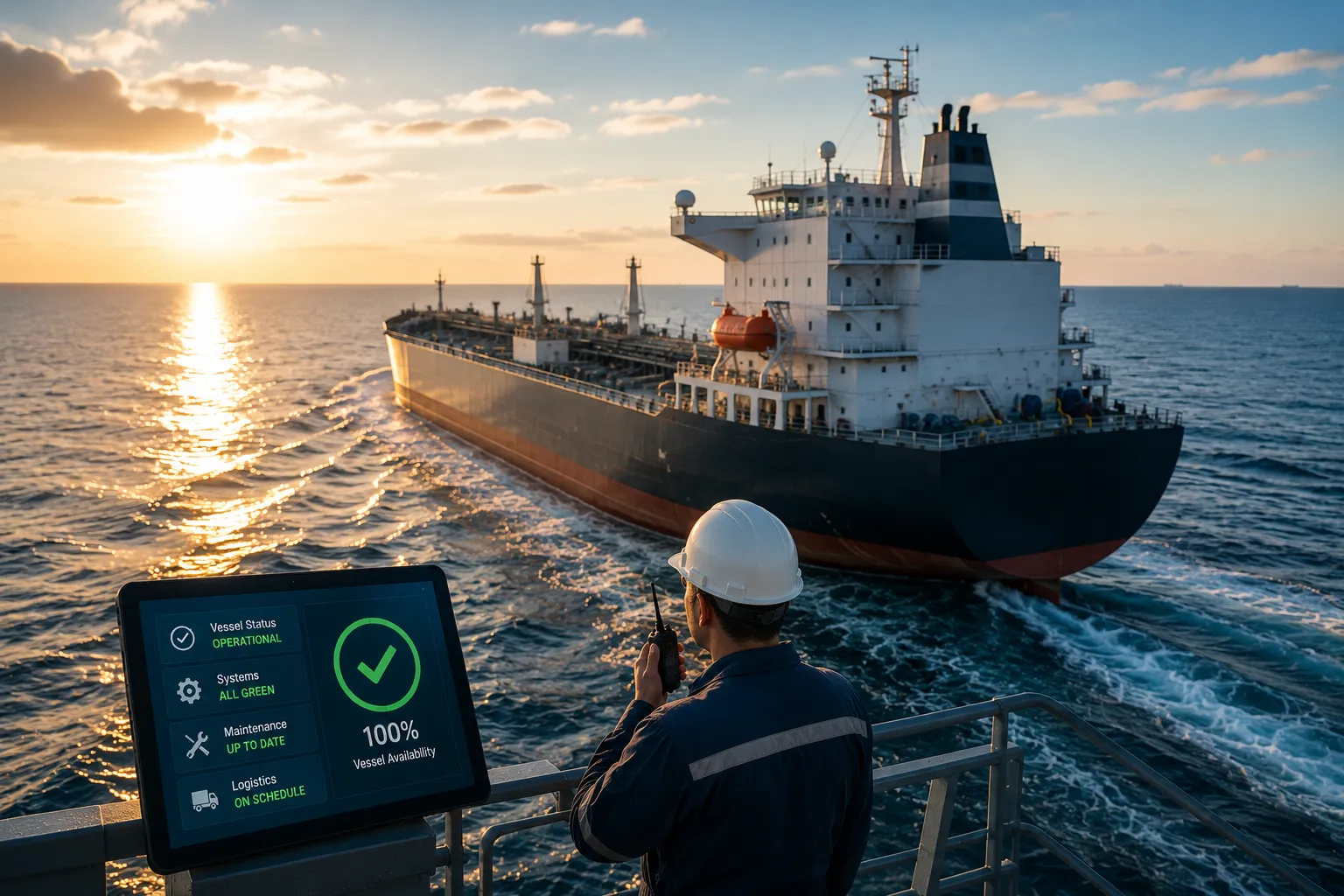
Maximizing Vessel Availability with Zero Operational Friction
As part of the JUKO SHIP SERVE ecosystem, our technical management seamlessly integrates with our global spare parts sourcing and repair logistics.
Frequently Asked Questions About Ship Technical Management
Navigating vessel technical management demands transparent operational insights, rigorous engineering standards, and reliable superintendence services. JUKO MARINE delivers class-approved ship management solutions designed to maintain high fleet technical uptime, optimize drydocking expenditures, and protect valuable marine assets across global trade routes.
 Technical Inspection
Class-Approved Technical Excellence
Our marine engineering superintendents combine decades of seagoing experience with data-driven planned maintenance systems to maximize asset value.
- ISO 9001 & DNV Certified Quality Framework
- Predictive Maintenance Diagnostic Integration
- Global Voyage Repair Coordination Network
Have Specific Fleet Needs?
Connect directly with our senior technical superintendents for a baseline audit of your vessel maintenance framework.
How does JUKO MARINE ensure high Class Survey pass rates for aging vessels?
Maintaining high class survey pass rates for aging vessels requires proactive engineering strategies rather than reactive emergency repairs. JUKO MARINE implements a rigorous 90-day pre-survey condition audit protocol. Senior marine superintendents inspect hull structural integrity, main and auxiliary machinery health, and safety installations well ahead of scheduled class renewal surveys.
Our superintendence services leverage cloud-enabled planned maintenance system (PMS) logs to demonstrate verifiable, continuous maintenance history to major classification societies, including DNV, ABS, LR, and CCS. Key pre-survey execution steps include:
- Comprehensive Hull Gauging: Ultrasonic thickness measurements to identify structural wear and corrosion hotspots early.
- Machinery Diagnostic Testing: Vibration analysis, main engine performance logging, and spectrographic lube oil testing.
- Statutory & Safety Audits: Verification of firefighting gear, lifesaving appliances, and environmental protection equipment.
- Class Liaison Management: Direct coordination with class surveyors to minimize conditional notes and prevent operationally costly delays.
Through this systematic preparation, JUKO MARINE consistently maintains an industry-leading 98.5% first-pass survey rate for merchant vessels exceeding 15 years of operational service.
What mechanism is used to keep drydocking projects within initial budget estimates?
Drydocking cost overruns typically stem from incomplete scope specifications and unmanaged, mid-project repair additions. JUKO MARINE controls drydocking expenditures through a structured four-phase project management framework that protects shipowners' operating budgets:
| Drydocking Phase | Budget Protection Action | Target Outcome |
|---|---|---|
| 1. Specification Engineering | Detailed physical surveys to define exact steel renewal, piping, and overhaul scopes. | Eliminates unquoted scope expansion and surprise repair add-ons. |
| 2. Competitive Tendering | Benchmarking quotes across pre-audited global shipyards with standardized tariffs. | Secures competitive fixed dockage and repair rates. |
| 3. Yard Supervision | Daily superintendence oversight and strict change-order validation on site. | Prevents unauthorized billing additions and shipyard work delays. |
| 4. Commissioning & Trial | Rigorous sea trials and line-item final invoice reconciliation before redelivery. | Ensures 100% billing accuracy and zero cost discrepancies. |
Additionally, our integrated marine spare parts sourcing network allows us to procure original equipment manufacturer (OEM) components directly. By eliminating middleman markups and securing shipyard slots early, JUKO MARINE delivers complex drydocking projects within initial budget estimates.
Are technical management programs tailored by vessel class such as Tankers, Containers, and Bulk Carriers?
Different vessel categories operate under distinct trading profiles, environmental mandates, and cargo-handling stresses. JUKO MARINE engineers custom technical management blueprints tailored specifically to Tankers, Container Ships, and Bulk Carriers:
Tanker Fleets
Focuses on SIRE 2.0 inspection readiness, TMSA compliance, cargo pump reliability, inert gas systems, and strict zero-spill safety protocols.
Container Ships
Prioritizes main engine thermal efficiency, reefer power generation reliability, strict liner schedule retention, and rapid port turnaround maintenance.
Bulk Carriers
Emphasizes hatch cover weather-tightness, hold structural monitoring, grab impact repairs, and ballast water management system (BWMS) optimization.
Each vessel class is assigned dedicated marine superintendents with specialized seagoing experience and technical command backgrounds in that specific vessel architecture.
How does JUKO MARINE handle sudden technical breakdowns in remote maritime zones?
Unexpected machinery failures in remote sea areas require rapid intervention to prevent off-hire losses and navigational hazards. JUKO MARINE operates a dedicated 24/7 Global Technical Desk capable of immediate emergency response.
Our emergency breakdown protocol follows a three-step intervention sequence:
- 1 Remote Telemetry Triage: Senior superintendents establish an immediate satellite connection with shipboard engineers to analyze alarm logs, sensor data, and perform root-cause troubleshooting.
- 2 Fly-in Riding Squad Dispatch: Specialized voyage repair engineers are dispatched from our nearest global hub equipped with portable diagnostic tools and machining gear.
- 3 Emergency Logistics & Port Clearance: Critical replacement components are pulled from strategic warehouse hubs and fast-tracked through local customs for rapid port delivery.
This seamless combination of remote technical guidance, rapid spare parts sourcing, and voyage repair coordination minimizes off-hire time and gets your vessel back on passage safely.
Strengthen Vessel Reliability with Proactive Technical Management
Work directly with JUKO MARINE technical specialists to review machinery condition, strengthen planned maintenance strategies, coordinate class and statutory requirements, and reduce the operational risk of unplanned downtime.
Integrated Technical Management Capabilities

From Technical Assessment to Action
A structured review of machinery condition, maintenance priorities, efficiency performance, and technical compliance requirements.
Machinery Condition Review
Review of critical machinery condition, maintenance history, defects, and operational reliability priorities.
CII & Energy Performance
Review of CII performance, EEXI-related requirements, fuel efficiency, and practical vessel energy-improvement opportunities.
Planned Maintenance Review
PMS review and maintenance planning focused on preventive action, critical equipment availability, and reduced downtime risk.