

A single unmonitored defect during yard assembly can quickly turn a multi-million-dollar vessel build into a commercial nightmare. That’s why robust construction supervision in shipbuilding is the ultimate safeguard for shipowners and operators looking to protect their assets.
Whether you need elite owner representation to enforce class compliance, manage technical inspections, or oversee critical sea trials (SAT), having expert engineers on-site keeps your project on schedule and on budget.
This guide breaks down how to evaluate third-party site supervision agencies, eliminate costly delays, and ensure your fleet is delivered defect-free.
Construction Supervision Shipbuilding: Pre-Construction Phase
Technical Specification & Contract Alignment
We review every line of the technical specification alongside the builder's contract to resolve conflicting clauses, vague requirements, and hidden costs before steel cutting begins.
-
- Scope Clarification: Eliminate ambiguous language regarding vessel speed, deadweight, and fuel consumption tolerances.
- Regulatory Gap Analysis: Ensure planned designs meet upcoming Flag State, IMO, and international environmental regulations.
- Commercial Protection: Lock in clear standards for materials, equipment brands, and operational performance criteria.
Plan & Drawing Approval
Our team conducts a rigorous naval architecture plan approval to verify that all structural, mechanical, electrical, and piping drawings conform to Class rules and international standards.
| Discipline | Key Verification Focus | Regulatory Standard |
|---|---|---|
| Structural | Scantling calculations, block joints, stress concentration points | Classification Society & IMO |
| Machinery | Shaft line alignment, main propulsion specs, auxiliary load balance | SOLAS & Class Rules |
| Electrical & Automation | Cable routing, power distribution, short-circuit calculations | IEC & Flag State |
| Piping & Outfitting | System pressure ratings, valve matrices, ballast treatment (BWTS) | MARPOL & Class |
Vendor & Subcontractor Screening
We audit critical equipment manufacturers and evaluate local shipyard subcontractors to ensure component reliability and build precision.
-
- Inspect major equipment suppliers for main engines, generators, and integrated automation systems.
- Verify subcontractor credentials, welder qualifications, and quality management systems.
- Enforce non-negotiable quality baselines across all third-party supply chains.
Establishing Site Supervision Protocols
We set up clear operational governance on the shipyard floor to maintain seamless marine engineering oversight throughout the build cycle.
-
- Reporting Lines: Define direct communication channels between site superintendents, yard management, and the owner project team.
- Quality Control Hold Points: Mandate formal hold-point inspections where work cannot proceed without our site team's signed approval.
- Inspection Schedules: Implement daily and weekly site audit routines covering structural fabrication, piping, and coating preparations.
On-Site Hull & Structural Fabrication Supervision
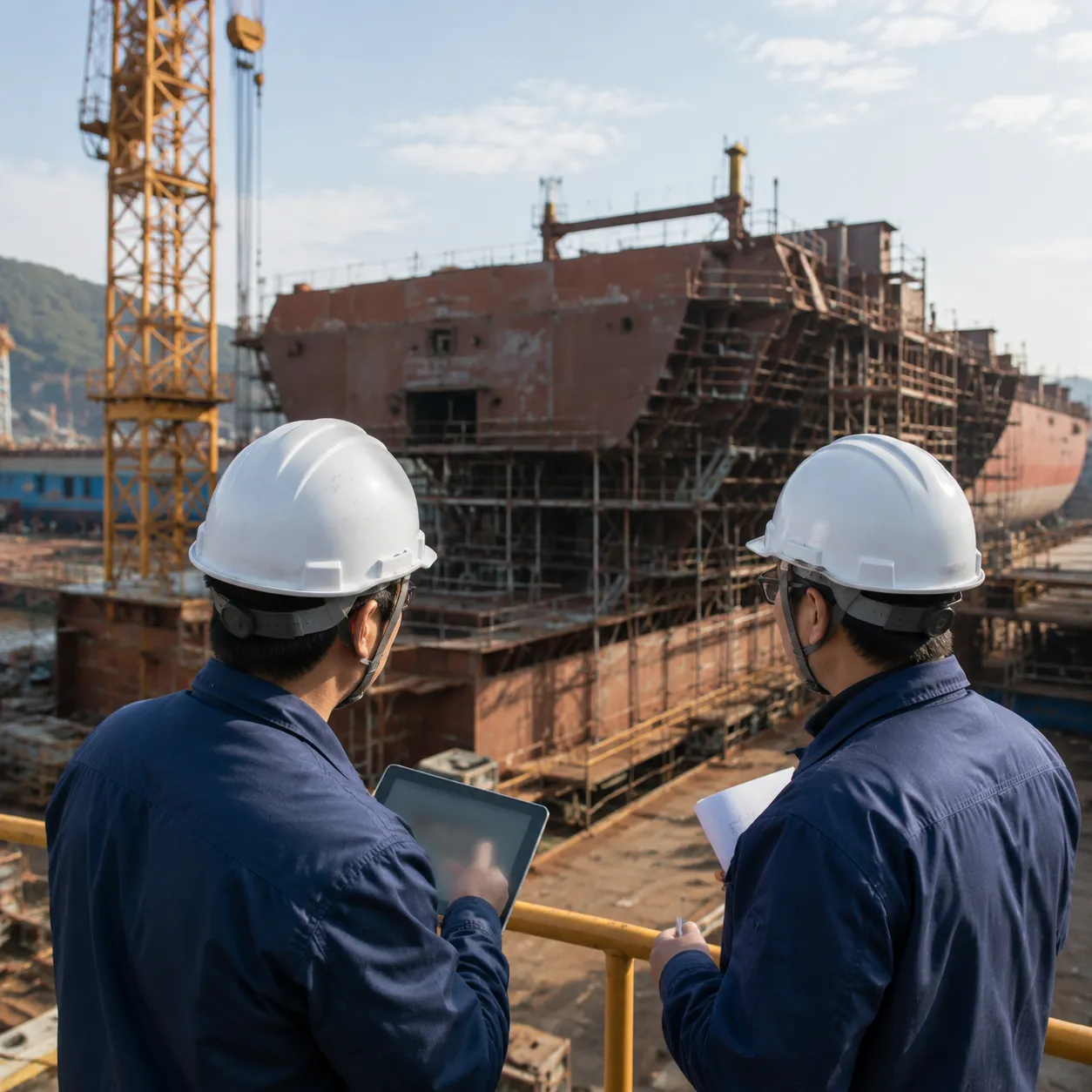
Steel fabrication forms the backbone of your vessel. During construction supervision shipbuilding projects, our team remains directly on the yard floor to catch structural flaws before they turn into permanent risks. Through our dedicated ship newbuilding supervision services, we enforce strict hull structural inspection standards and verify every phase of assembly.
Steel Material Inspection
-
- Mill Test Certificates: We cross-check steel plate grades and heat numbers against approved plan specifications before steel cutting begins.
- Surface Preparation: We monitor shot-blasting to ensure an Sa 2.5 profile and verify uniform shop primer application.
Block Fabrication & Alignment
-
- Welding Qualifications: We audit Welding Procedure Specifications (WPS) and verify welder credentials for both automated and manual welding operations.
- Dimensional Accuracy: We track laser alignments and enforce tight tolerances during block fabrication and grand block joining to prevent structural stress.
Non-Destructive Testing (NDT) Oversight
-
- Weld Auditing: We oversee Ultrasonic (UT), Radiographic (RT), and Magnetic Particle Inspection (MPI) on high-stress structural joints.
- Class Compliance: We verify all NDT results directly against classification society compliance rules to catch internal defects early.
Surface Preparation & Marine Coatings
| Focus Area | Inspection Standard | Key Requirement |
|---|---|---|
| Blast Profile | Surface Profile Gauge | Sa 2.5 surface cleanliness prior to coating |
| Ambient Conditions | Environmental Monitoring | Steel temperature kept at least 3°C above dew point |
| Paint DFT Checks | Magnetic/Ultrasonic DFT Gauge | Verification of target Dry Film Thickness across all coats |
| Ballast Tank Preservation | Multi-Coat Inspection | Complete stripe-coating and pinhole-free coverage in critical spaces |
Our daily presence during shipyard quality control guarantees your hull is built for long-term durability, preventing costly re-work and premature corrosion at sea.
Construction Supervision Shipbuilding: Machinery & Systems Integration
We know that major mechanical breakdowns at sea often trace back to poor installation in the yard. During this critical phase of construction supervision shipbuilding, our team stays on the shipyard floor to ensure every piece of propulsion, piping, and electrical infrastructure meets exact engineering tolerances before vessel commissioning.
Main Engine & Auxiliary Plant Alignment
We oversee bedplate positioning, shaft line laser alignment, and overall propulsive system integration. Catching a fraction-of-a-millimeter offset on the yard floor eliminates structural vibration, premature bearing wear, and expensive shaft failures down the line.
Systems Installation & Compliance Summary
| System Area | Key Inspection Focus | Operational Impact |
|---|---|---|
| Main Engine & Auxiliary | Bedplate leveling, shaft alignment, choke pouring, propulsion integration | Prevents engine damage, excessive vibration, and shaft wear |
| Piping & Outfitting | Hydraulic line cleanliness (pickling/flushing), hydro testing, valve arrangements | Avoids system contamination, pressure drops, and fluid leaks |
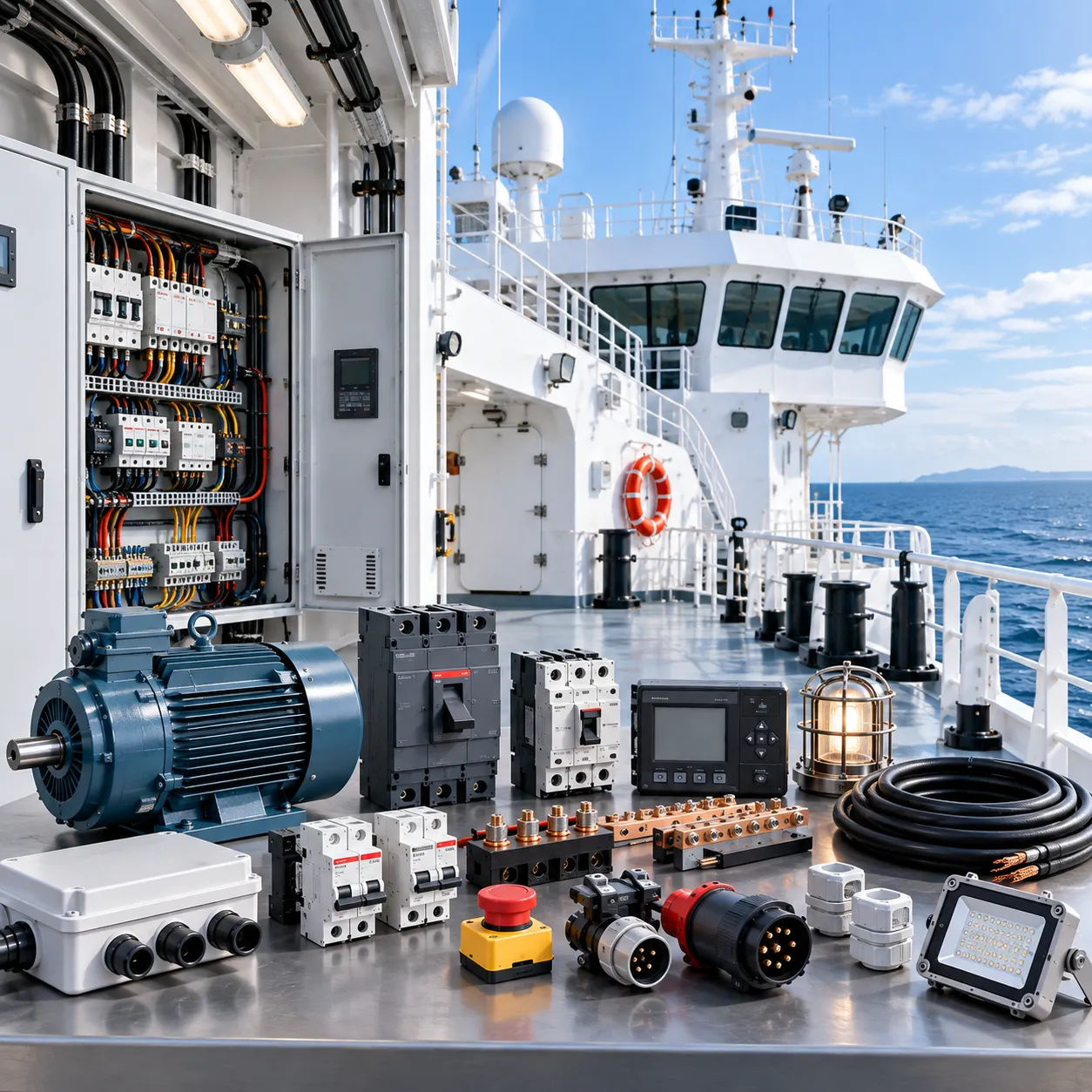
| Electrical & Cabling | Cable tray routing, power/control line segregation, switchboard testing | Prevents signal interference, short circuits, and electrical fires |
| Safety & LSA | SOLAS, MARPOL, and Flag State regulatory audits | Guarantees total safety and compliance management before sea trials |
Technical Execution & Safety Oversight
-
- Piping Integrity: We enforce strict cleanliness standards for hydraulic lines and witness hydrostatic pressure testing across all critical piping networks.
- Electrical & Automation: Our team audits cable routing, switchboard installation, and fire detection loops to guarantee zero signal interference between power and control lines.
- Safety & LSA Checks: We inspect all Life-Saving Appliances (LSA) and fire-fighting arrangements to confirm complete alignment with international maritime regulations. Maintaining uncompromising quality and compliance standards protects your crew, your cargo, and your capital investment.
Vessel Delivery & Guarantee Management

Handover & Warranty Action Items
| Phase | Focus Area | Core Actions |
|---|---|---|
| Punch List Management | Defect Rectification | Systematically track, prioritize, and re-inspect structural, machinery, and coating defects prior to handover. |
| Class & Certification | Regulatory Compliance | Verify all as-built drawings, operating manuals, statutory certificates, and Flag State documentation. |
| Guarantee Support | Latent Defect Protection | Establish warranty tracking systems, file shipyard claims, and provide technical support post-delivery. |
Key Delivery Protocols We Enforce
-
- Category-A Punch List Rectification: We enforce a strict zero-compromise policy on critical safety and operational items. No vessel is accepted until high-priority defects are fully cleared on the yard floor.
- As-Built Documentation Verification: We audit all final drawings, test reports, and classification society certificates to guarantee smooth integration into long-term technical management and daily vessel operations.
- Structured Guarantee Tracking: We set up a streamlined warranty logging system to catch latent defects, holding the shipyard strictly accountable for repairs throughout the 12-month guarantee period.
The Business Case for Construction Supervision Shipbuilding
Building a new vessel represents a massive capital expenditure. Relying solely on the shipyard's internal quality control is a financial gamble. Our independent construction supervision shipbuilding presence acts as your dedicated technical safeguard on the yard floor, ensuring every block, weld, and system installation meets your exact technical specifications. By leveraging our specialized marine technical services, we shield your asset from hidden defects and ensure long-term operational profitability.
Risk Mitigation
-
- Structural Integrity: Catch bad weld profiles, poor plate fit-ups, and structural misalignments before steel plates are sealed.
- Corrosion Prevention: Enforce strict ambient and surface preparation standards to avoid premature ballast tank coating failure.
- Machinery Reliability: Verify exact engine alignment and piping cleanliness to prevent early mechanical breakdowns post-delivery.
Schedule Integrity
-
- Proactive Oversight: Daily site monitoring prevents yard-induced delays by catching mistakes immediately rather than during final assembly.
- Fast Resolution: Immediate technical feedback on non-conformances keeps project milestones on schedule without sacrificing quality standards.
Cost Management
-
- Defect Rectification at Yard: Fixing an error on the shop floor costs a fraction of repairing it at sea or during drydocking.
- Minimized Off-Hire Time: Superior initial build quality directly translates to fewer emergency repairs, lower lifecycle maintenance expenses, and maximum vessel availability.
Frequently Asked Questions: Construction Supervision Shipbuilding
What is third-party construction supervision in shipbuilding?
Third-party construction supervision in shipbuilding is an independent technical oversight service representing the vessel owner directly at the shipyard. We monitor every stage of construction to guarantee the yard meets contractual specifications, safety standards, and build quality.
| Focus Area | Scope of Supervision |
|---|---|
| Quality Control | Steel grading, weld integrity, surface coating, and alignment |
| Compliance | Class rules, Flag State regulations, and SOLAS requirements |
| Project Execution | Milestone tracking, FAT/HAT/SAT testing, and punch list resolution |
Why is independent technical supervision necessary if the shipyard has its own QA/QC team?
Shipyard QA/QC teams report to yard management, which prioritizes delivery speed and production budgets. Our independent newbuilding supervision services provide unbiased oversight solely dedicated to the owner's long-term interests.
-
- Yard QA/QC: Verifies basic build requirements against production deadlines.
- Independent Supervision: Prevents shortcutting, catches latent defects on the floor, and enforces full specification compliance.
How does construction supervision ensure classification society compliance?
Classification society surveyors check compliance against baseline safety and structural rules, but they do not provide continuous daily oversight. Our marine technical team stays on site full-time, working directly with Class surveyors while auditing detailed workmanship, piping cleanliness, and paint DFT profiles that fall outside Class routine checks.
When should a vessel owner engage a technical supervision team for a newbuilding project?
Owners should engage a technical supervision team during the contract negotiation and plan approval phase—months before steel cutting starts. Early involvement allows us to eliminate specification ambiguities, audit vendor selection, and set strict quality hold points before construction begins.